
Likable
Where I take you, dear reader, through the impossible-seeming past

An early memory was the despair of not existing.
If I misbehaved my mother gave me the silent treatment. I soon learned the only way back into existence was to write my way into it. I found that if I wrote her a letter to express myself, magically she would acknowledge my presence again.
The other way to get noticed was to act out. The two went together—act out, and write my way back into existence. It was a lot to put on a six-year-old and I’m only coming out of it now.
I have been doing EMDR therapy for a year or so. I don’t normally discuss trauma—it can be self-indulgent, but in this case, I’ll make an exception in the hopes of sharing something others might find useful on their own journeys.
In EMDR you relive painful episodes in order to deal with them calmly and not fire up a flight/fight response. In this scenario I was stuck. I had written to my mother to be forgiven. Writing is the thing that gives me meaning; paradoxically the writing’s intent was to appeal to a higher authority—an appeal, a plea, for permission to exist.
How does a six-year-old navigate their emotions when the adults in their life are just as broken and cannot navigate theirs? What happens when it sets the template for normalcy?
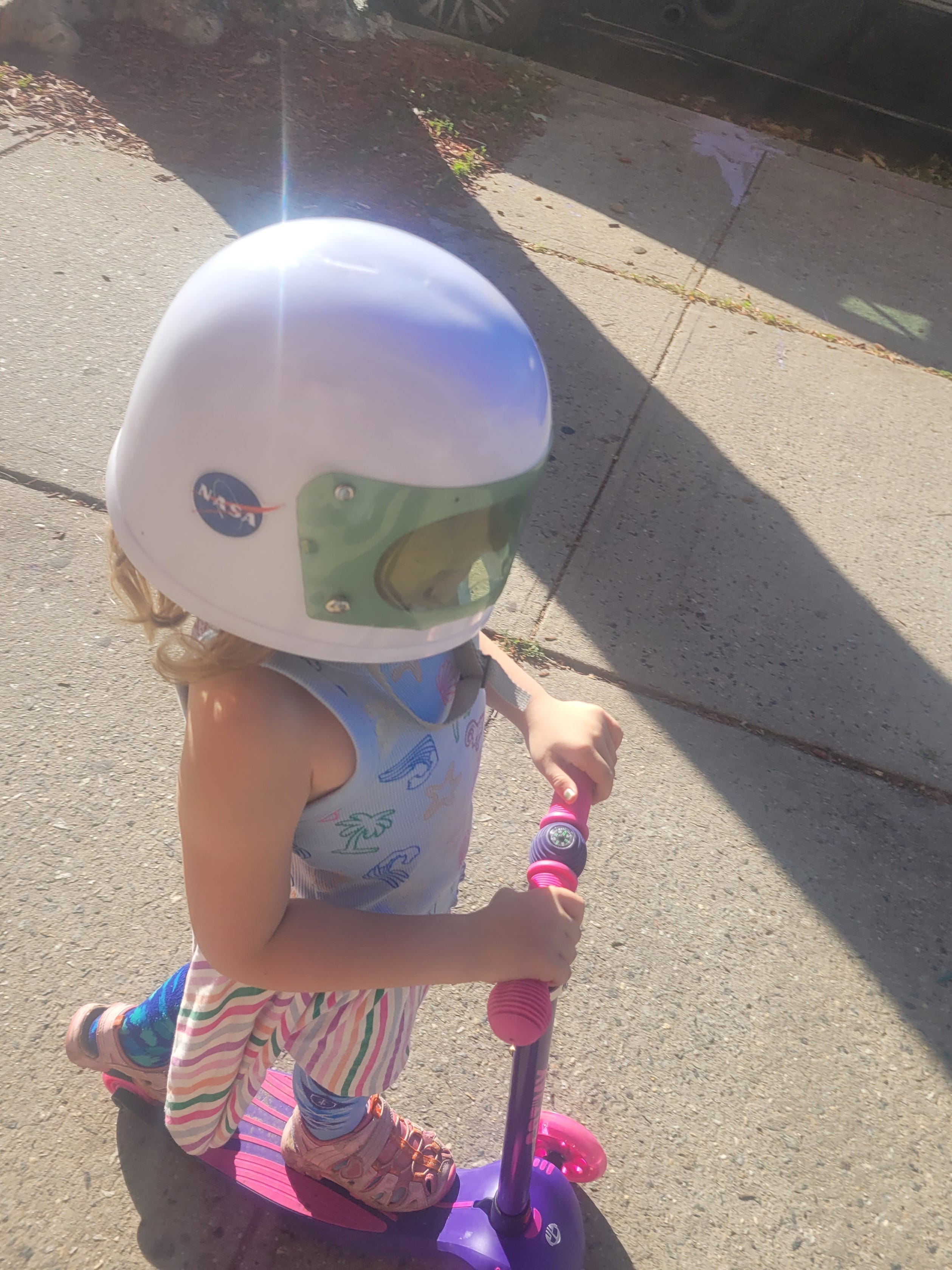
It was a stalemate. My therapist offered a third option--have a superhero come save me, whisk the six-year-old boy from the room. I closed my eyes and imagined that superhero was my six-year-old daughter, Jane.
I have lived my life with the core belief that I am unlovable. I don’t say this was self-pity or fishing for validation. I never learned to love properly, never had that behavior modeled. When things went wrong, I believed they were my fault because bad behavior was normalized.
Anyway, Jane, light of my life, came to the rescue.
I imagined we wrote that letter together—two six-year-olds. Then she and I presented the letter to my mom, and went and played on the swing-set together. We were able to move on. No longer be stuck. The incident no longer had the same gravity it once had.
Later, in the scenario, I had to imagine myself in the place of the parent, alongside my inner child and Jane, who helped me find the way. I explained that adults didn’t know. They could be even more confused, programmed with delusions and bad behavior as adults.
I scooped my six-year-old self and my imaginary-actual daughter in a hug. I felt joy. Real joy. It was like a piece of me snapped together—my inner child and the next generation. I was livable, whole, complete.
I felt joy.
Things hit a kind of turning point for me this year. Sigma tau Delta was generous enough to host me for a discussion for my writing after I was awarded a finalist prize by NJ State Council of the Arts—very nice to get paid for writing. Of course, my car died three days after I received the award and I had to totally wipe out my savings to buy a new one. And my sister went into a meth-induced coma for several weeks and is now a zombie who can only say four words...but that’s another story.
During the question/answer session, a student asked me: when you write aren’t you afraid/self-conscious of not being likable?
Spontaneous truth is the best kind—answering a question you didn’t know you had the answer to. I responded that as you get older being likable matters less as you discover your perspective and concept of truth differs from others. Some people will never like you. Some are incapable. And who cares? It is freeing to finally feel that way (I will briefly point out that social media trains people in the other direction. Being “liked,” getting “likes” is the all-important God of the internet).
Truth is subjective. We tell ourselves stories to live as Didion said. We tell ourselves stories in dreams. It’s a natural part of us. Biological hardware. Every thought has a little bit of fiction, a little imagination and certainly our own bias in it. But ultimately, to live in a way that is true to your beliefs—that is what it means to be a whole person.
It happened that night after the book discussion, I had dinner with my parents. They don’t often ask questions about my life. My mom asked if anything happened during my talk—I was surprised she remembered. I mentioned the student question. My father who is contrary—it is a way he differentiates himself from his inferiors—laughed and said my response was the biggest load of bs he ever heard. More or less.
My father is a good man, but one who lives passionately in delusion.
I realized I had to put my money where my mouth was. I had found truth. If I didn’t express it, it was just another lie, delusion, I told myself, and then I would be no better than my father. They say the truth will set you free. Does that freedom mean that you might find yourself alone? Sure. You’re less likable, but you only live one life and must be true to who you are.
Paradoxically, I’m a fiction writer, but without a commitment to the truth, you will lie to yourself. Your actual life will be a fiction.
I had to go back. I had to as an adult find the child I once was. I had to be the parent to myself that I didn’t have. I had to be both.
In the past, with less-skilled therapists leading guided meditations (or my own issues clouding things), I would picture my adult self with my child self at a horse paddock on my grandmother’s farm, staring out at the horses. It felt awkward. Neither of us knew what to say to each other, we were separate. Strangers. Now we’re integrated and that makes all the difference
My daughter saved me. Or my inner child. However, you interpret it.
I still feel the warmth of our hug. I feel our joy. And it never happened.
And it did.
I've had similar experiences with EMDR and other forms of awareness/therapy work, and you described it so beautifully, truthfully, authentically. Sending you a big hug of love and gratitude.